
Trading Pro Q&A: How do you track psychology vs performance?


Successful trades don't always mean good trading. Three Exness Team Pros reveal the metrics, journal entries, and habits they use to track both their mindset and trading performance.
I thought I understood trading discipline—until I spoke with these three Exness Team Pro members. Their approach to journaling goes far beyond recording profits and losses. Every trade becomes a lesson, every rule violation a data point, and every emotional impulse something worth documenting. So I asked them how they measure not only their trading performance, but also their mindset. Their answers reveal that consistent traders don't just analyse the markets—they analyse themselves. By tracking discipline alongside results, they can identify emotional patterns before they become costly mistakes.
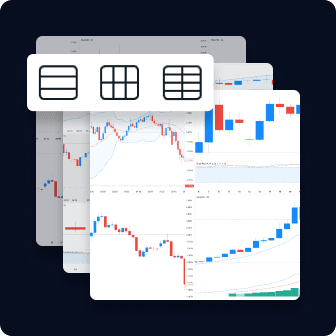
Stay in control of your Exposure
Watch up to 8 charts on one screen and manage your risk at a glance.
What metrics or journal entries do you use to assess both your mindset and trading performance?

Nico Palacios
Exness Team Pro LATAM
I keep a record of every trade I make, and over the course of a year that adds up to a significant amount of data. That repetition is what shows me whether I'm executing my strategy consistently or simply reacting to the market. The metric that tells me the most about my psychology isn't my win rate—it's whether I followed my checklist on every trade and whether I moved my stop loss only when my rules allowed it, not when fear or anxiety tempted me to.
I also track my total exposure by asset, my available capital (what I call my "breathing room" for continuing to manage positions), and, most importantly, my maximum drawdown. Drawdown is my emotional thermometer: it doesn't measure how much I ultimately lost—it measures how painful the worst point of the decline felt and whether I was able to stay disciplined without pulling my money out. If, during a drawdown, I felt the urge to intervene outside my trading rules, I record that as a psychological warning sign rather than a piece of market data.
Insight for traders:
Track your process—not just your profits. Recording rule-following, drawdowns, and emotional reactions reveals far more than your win rate alone.

Mohamed Albadi
Exness Team Pro MENA
I always track my losing trades, my winning trades, and how consistently I followed my analysis. I also keep a record of every rule violation, such as widening my stop loss or closing a trade before it reached its target. Another question I regularly ask myself is whether my decision-making changes once I start losing. This helps me identify when emotions begin to influence my trading.
On the other hand, I also document the decisions where I stayed disciplined and the trades that were executed strictly according to my strategy. My goal is to turn daily trading into a consistent habit and disciplined behavior, rather than simply placing trades.
Insight for traders:
Journal both mistakes and disciplined decisions. Consistency comes from reinforcing good habits—not simply measuring profitable trades.

Nathan Halaba
Exness Team Pro SSA
I don’t just look at the win or the loss, to be honest. I’m looking at how well I actually followed the process.
I pay attention to things like: Did I jump in too early? Did I actually respect my risk? Was I chasing FOMO? Did I mess with the position for no reason? Those are the questions that matter.
You have to realize you can make money from a bad trade and lose it on a good one. So if you’re only journaling your P&L, you might be rewarding the wrong behavior without even knowing it.
For me, a good day is about discipline. Did I stick to my analysis? Did I wait for confirmation? Did I manage the risk right? That tells me way more about where I’m at psychologically than the dollar amount.
Insight for traders:
A profitable trade isn't always a good trade. Measure your discipline, risk management, and decision-making—not just your account balance.
Key takeaways
- Successful traders measure discipline as closely as profits and losses.
- Journaling rule violations helps identify emotional decision-making.
- Success rate alone doesn't accurately reflect trading performance.
- Tracking drawdowns provides insight into emotional resilience under pressure.
- Process-focused metrics reinforce consistent trading habits.
- Good trading decisions should be rewarded—even if they result in a loss.
- Reviewing your mindset regularly helps prevent recurring psychological mistakes.
Share:
Related


Exness Trade app
Trade with confidence anytime, anywhere.


Get the app
App title

Trading is risky. T&Cs apply.


